When Adventure Feels Too Much
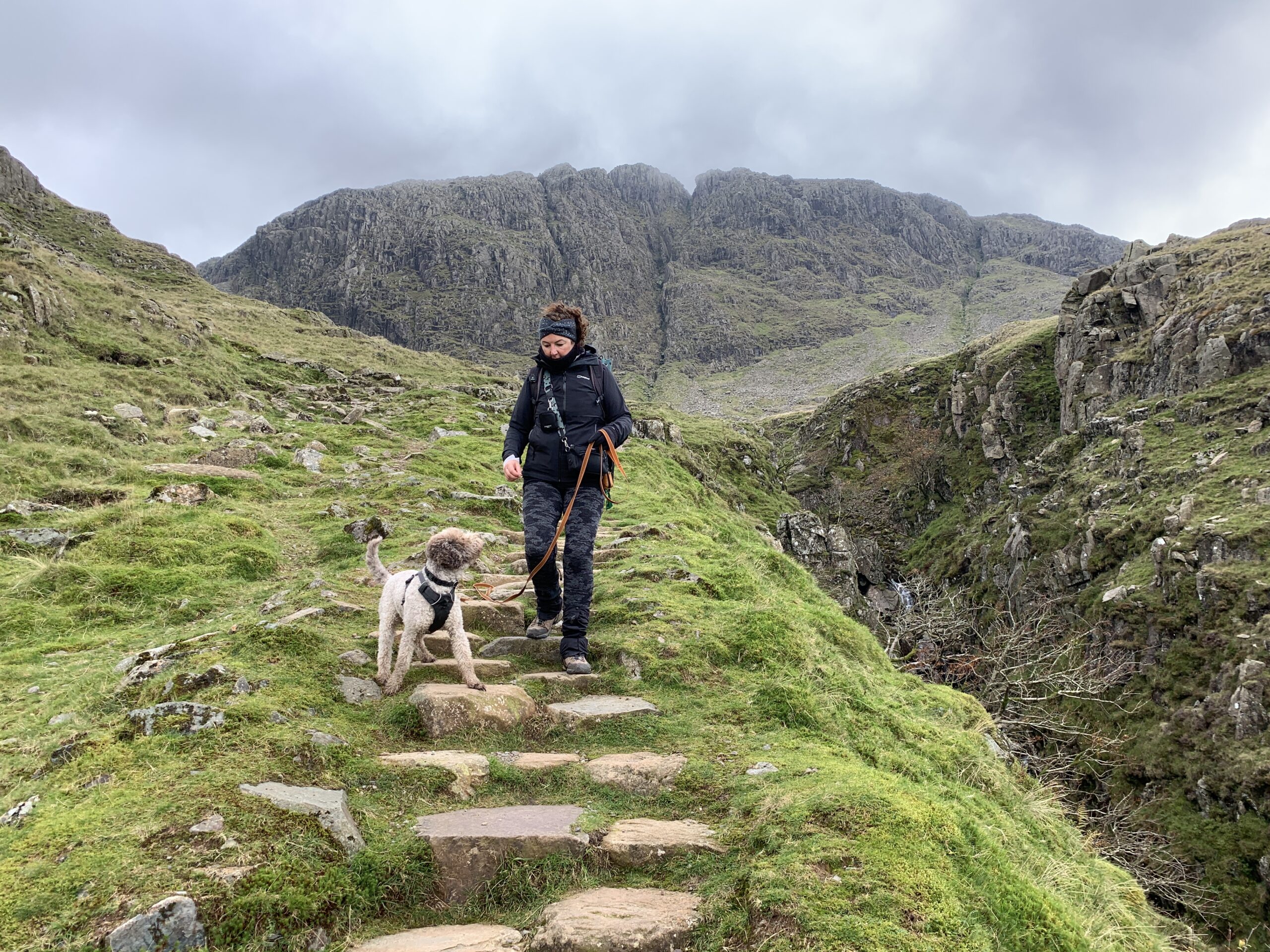 Helping Dogs Cope With Big Feelings in the Real World
We imagine it so clearly, don’t we?
A dog trotting beside us along the beach.
A pause outside a coffee shop.
A woodland walk where the lead feels loose and the air feels spacious.
That’s what I imagined too.
But the early reality with Diggory looked very different.
From around ten weeks old, the world felt huge to him and his response to that overwhelm showed up fast. Biting the lead. Biting me. Biting the buggy. Every new place, every new experience tipped him over quickly. It wasn’t defiance. It was overload.
Somewhere underneath all of that was the quiet pressure so many of us feel:
You’ve got to socialise. You’ve got to get them out there.
But how do you do that when your puppy simply can’t cope with what’s in front of them?
The Hidden Challenge of Adventure Dogs
Adventure doesn’t just mean exercise.
It means exposure.
Beaches, cafés, trails, villages, busy paths, these environments are rich, alive and unpredictable. For many dogs, especially sensitive, perceptive or highly driven ones, that richness creates emotional pressure long before it creates joy.
With Diggory, we learned very early that less really was more.
We didn’t go out every day.
We built in recovery.
We treated exposure like something to digest, not collect.
We’d sit at a distance.
Let him watch.
Allow a brief meet and greet and then step away so his nervous system could settle.
Watching and recovering became just as important as doing.
That gentleness wasn’t holding him back.
It was teaching him how to stay present in the world without drowning in it.
Why Frustration Isn’t an Impulse Control Problem
What I see now, both in my own dog and in the dogs I support, is that so many struggles get mislabelled as “impulse control”.
But frustration isn’t a lack of training.
It’s a felt emotional experience.
It’s what happens when a dog wants access, to movement, dogs, smells, space and their nervous system doesn’t yet have a coping plan for when that access isn’t available.
With Diggory, the early explosions weren’t the problem.
What mattered more was what happened after.
That was the first sign things were shifting.
Even when his initial response was big, his recovery started to improve. He could shake it off. He could move on. The rest of the walk wasn’t ruined.
That told me far more than any sit or heel ever could.
When Watching the World Feels Too Hard
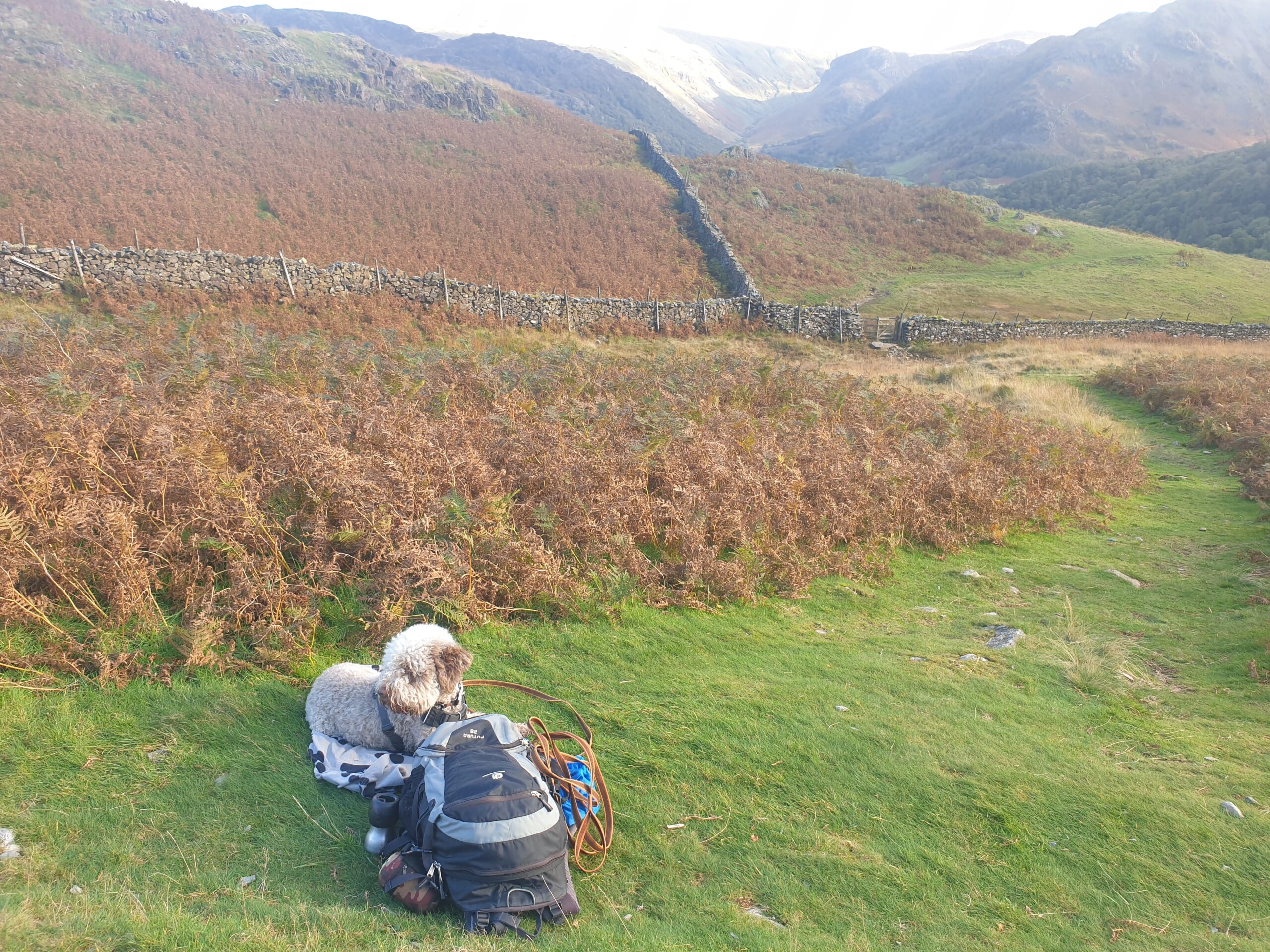
Not all dogs show overwhelm in the same way.
Some dogs are loud:
-
Barking
-
Lunging
-
Pulling
-
Grabbing the lead
Others go quiet:
-
Freezing
-
Shutting down
-
Disconnecting
-
Looking “calm” while feeling anything but
Diggory was very expressive early on and I was very aware, painfully aware, of how visible that was.
The looks from other people.
The judgement.
The feeling that one small thing could tip me over too.
That’s when I realised something important….
It wasn’t just Diggory who needed support.
It was me.
Why Ignoring Big Feelings Doesn’t Create Calm
At my lowest point, I dreaded walks.
I was doing all the training.
I was managing exposure.
I was being careful and thoughtful.
But still, life felt small.
That was the moment I sought support for myself, not as a trainer, but as a human. Learning how to ground myself. How to regulate my own nervous system. How to breathe, soften and stay present instead of bracing.
Everything changed from there.
Because no amount of training matters if neither end of the lead can regulate.
Ignoring frustration doesn’t teach coping.
It teaches endurance and eventually, shutdown.
Dogs don’t learn calm by being left alone in overwhelm.
They learn calm through co-regulation.
 Adventure, Arousal & the Nervous System
 Adventure, Arousal & the Nervous System
As Diggory grew, we carried this lens into everything we did.
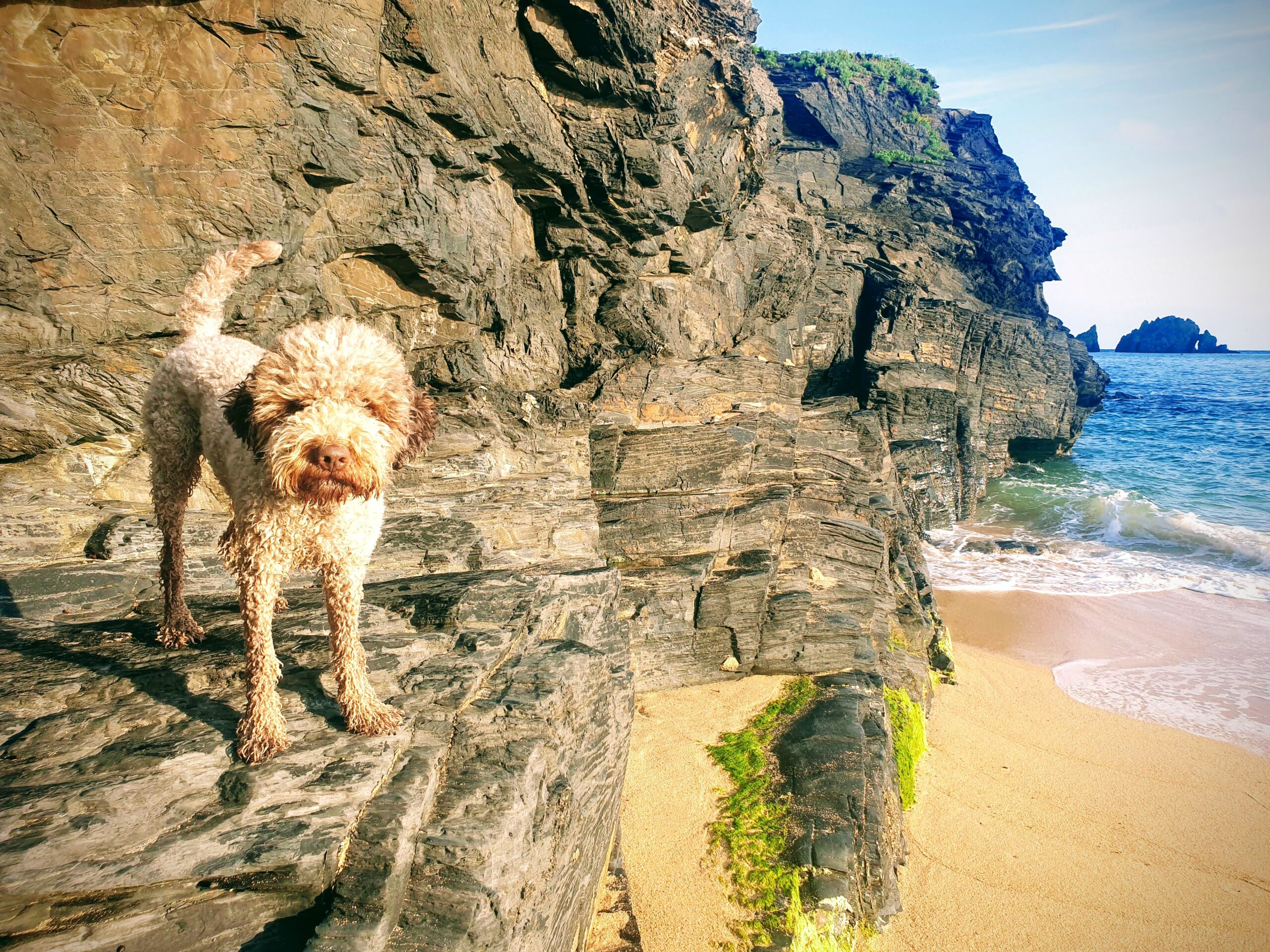
My parents have a place in Cornwall and we spend a lot of time there. The beach should have been the dream, but for a long time, it was simply too much. Too big. Too many dogs. Too much movement.
So we changed how we adventured.
We chose quieter locations.
Different times of day.
Different seasons.
Distance became our friend.
Timing became our strategy.
Recovery became non-negotiable.
Slowly, something shifted.
Diggory could be in those spaces, not perfectly, not endlessly, but with enough regulation to stay present and come back to himself.
Teaching Dogs How to Be in the World
This is the heart of everything I now teach.
There’s a difference between:
asking a dog to behave
and
teaching a dog how to cope.
Coping means:
-
Watching without tipping over
-
Disengaging and returning
-
Recovering after excitement
-
Having space to settle back into the body
Loose lead walking, recall, café calm, wildlife watching, these aren’t separate problems.
They’re expressions of the same thing:
How safe does this dog feel in their nervous system right now?
Why This Changes Everything for Walks, Recall & Real Life
Diggory still does all the things we’ve always loved.
We still go to the beach.
We still walk in busy places.
We still live a full life together.
The difference now is capacity.
He can regulate in the moment.
I can read the early signs.
We can move, support, pause, or leave, without guilt.
We’re 2 month post-castration now, so yes, there are still wobbles and that’s okay. Because I understand what’s going on for him and I know how to help him through it.
That understanding is what keeps the world open.
Because when dogs can watch the world without being overwhelmed by it, they get to stay in it.
More beaches.
More trails.
More shared moments.
If This Resonates…
 If This Resonates…
If you’re reading this and quietly thinking,
“This feels like my dog… and me,”
you’re not alone.
If adventures feel heavy instead of shared,
if walks leave you tense,
or if your dog struggles to cope with the world moving around them,
it doesn’t mean you’re doing it wrong.
It usually means the nervous system needs support, at both ends of the lead.
I’ve created a gentle mini programme designed to help you slow things down, tune in and begin building calm in a way that actually lasts.
Inside the Calm Rhythm Reset, we focus on:
-
Understanding arousal and frustration through a nervous-system lens
-
Supporting recovery, not just exposure
-
Building awareness before behaviour
-
Helping you and your dog feel safer navigating real life together
There’s no pressure.
No fixing.
No expectation to “push through”.
Just an invitation to pause, notice and begin again, with more understanding and less overwhelm.
👉 Calm Rhythm Reset – Free Mini Programme
Because when calm comes first,
everything else has somewhere solid to grow from.