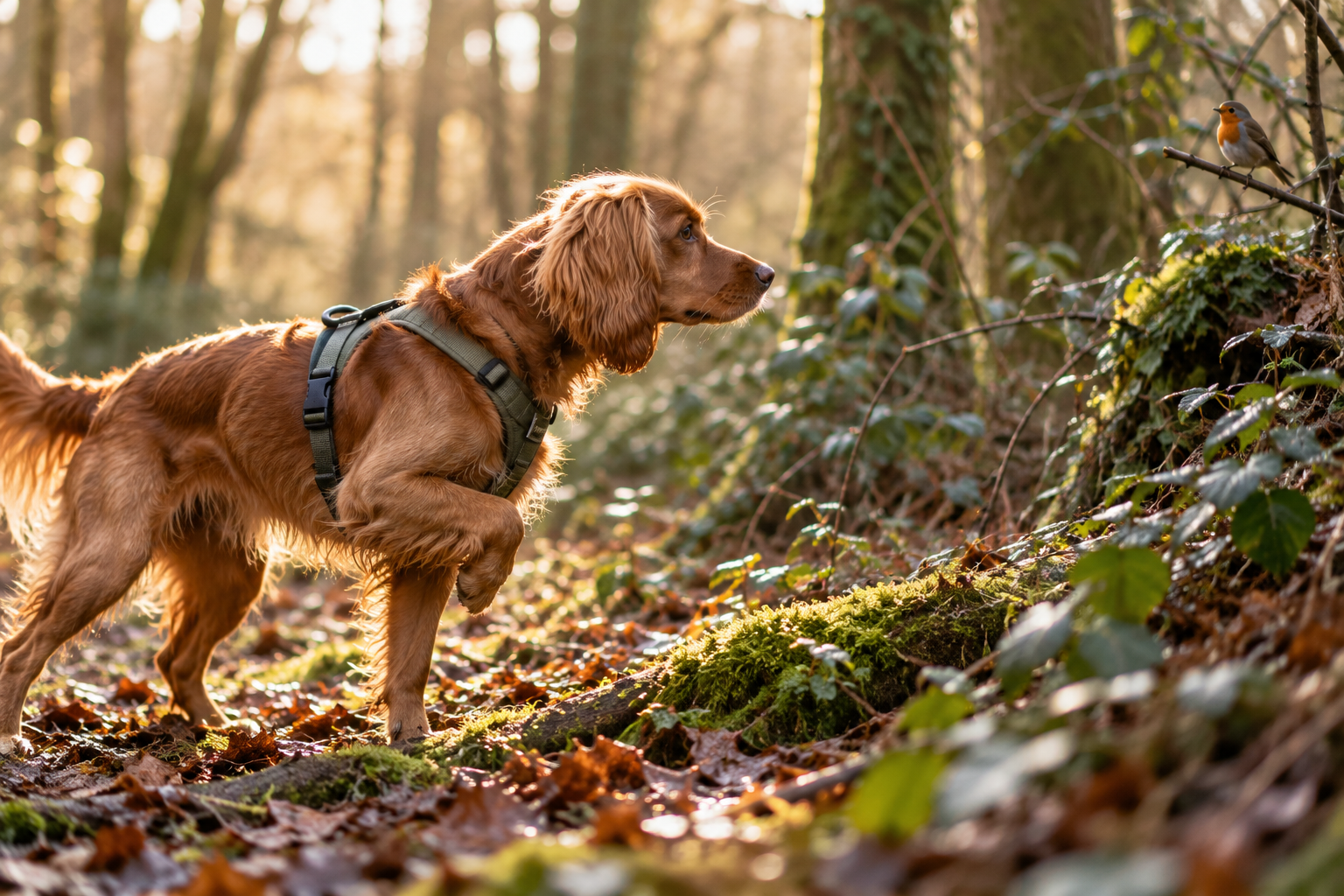
Does Your Dog Become Fixated on Birds?
Have you ever been enjoying a lovely woodland walk when suddenly your dog stops in their tracks, lifts their head and becomes completely absorbed in something you can’t even see?
Perhaps they’ve spotted a bird moving through the undergrowth, heard the familiar call of a pheasant or picked up an interesting scent that seems to take over their entire world.
Just like that, your peaceful walk feels very different.
You might notice their body becoming still, their attention narrowing or their excitement building. Perhaps they’re pulling towards the hedgerow, struggling to move on or finding it difficult to respond when you call them.
For some dogs, that excitement might turn into chasing. For others, simply knowing that birds are nearby is enough to make it difficult to think about anything else.
It’s easy to feel frustrated, particularly when you’ve been working so hard on your dog’s recall or loose-lead walking.
But what if we started looking at these moments a little differently?
Rather than focusing entirely on how to stop the behaviour, what if we became curious about why birds have such a powerful effect on our dogs, and how we can help them feel more capable around them?
It’s Not Always About Chasing
When we think about dogs and birds, we often picture a dog suddenly taking off across a field after a pheasant or disappearing into the undergrowth in pursuit of something that’s caught their attention.
But there’s so much more happening before we ever reach that point.
Our dogs experience the world very differently from us. While we might be enjoying the scenery, they’re gathering information through their senses, picking up scents, noticing the slightest movements and hearing sounds we may not even be aware of.
For some dogs, the rustle of a bird in a hedgerow is enough to spark their curiosity. Others might become incredibly focused on a scent trail, scanning their surroundings or anticipating where a bird might appear next.
That interest isn’t necessarily a problem. Exploring, investigating and responding to their environment are all part of being a dog.
What matters is how our dogs are coping with what they’re experiencing.
Can they notice a bird and continue exploring? Can they shift their attention naturally, or are they becoming increasingly absorbed, excited or frustrated?
Sometimes the signs are subtle. A change in posture, a moment of stillness, a quicker pace or a growing difficulty in moving away.
By recognising these early changes, we have an opportunity to offer support before our dogs reach the point where they’re finding it difficult to make other choices.
Because helping our dogs around birds isn’t simply about stopping the chase. It’s about understanding what draws their attention and gradually helping them develop the skills and emotional capacity to enjoy the world around them.
Birds Are Part of Their World Too
One of the things I love most about exploring the outdoors with Diggory is watching him experience the world in his own way.
While I’m enjoying the views, the fresh air and the chance to switch off from everyday life, he’s busy discovering a whole world of scents, sounds and movement that I can only begin to imagine. I don’t want to take that away from him.
Our dogs have natural instincts that influence what captures their attention. For some, particularly breeds developed to hunt, flush or retrieve, birds can be incredibly exciting. But whatever their breed, each dog brings their own experiences, preferences and sensitivities to the adventure.
The aim isn’t to teach our dogs to ignore everything that makes the world interesting. It’s to help them enjoy those experiences without becoming completely consumed by them.
That means giving them opportunities to sniff, explore, observe and make choices, while recognising when their excitement or frustration is beginning to build.
Of course, we also have a responsibility to protect the wildlife we share these beautiful spaces with. Allowing our dogs to enjoy their natural instincts doesn’t mean allowing them to chase or disturb birds.
It’s about finding that balance between freedom, safety and emotional wellbeing.
Because when we begin to understand what matters to our dogs, we can create adventures that feel more enjoyable and manageable for both ends of the lead.
It Starts Before Your Dog Chases
It’s often the moment our dog takes off after a bird, lunges towards a hedgerow or suddenly stops listening that we realise things have become a little too exciting.
But if we look more closely, there are often small changes happening long before that moment.
Perhaps your dog lifts their head as they catch an interesting scent, their ears become more alert or their pace begins to quicken. They might pause to listen, scan the surrounding trees or become increasingly interested in a particular patch of undergrowth.
These are the moments I encourage owners to become curious about.
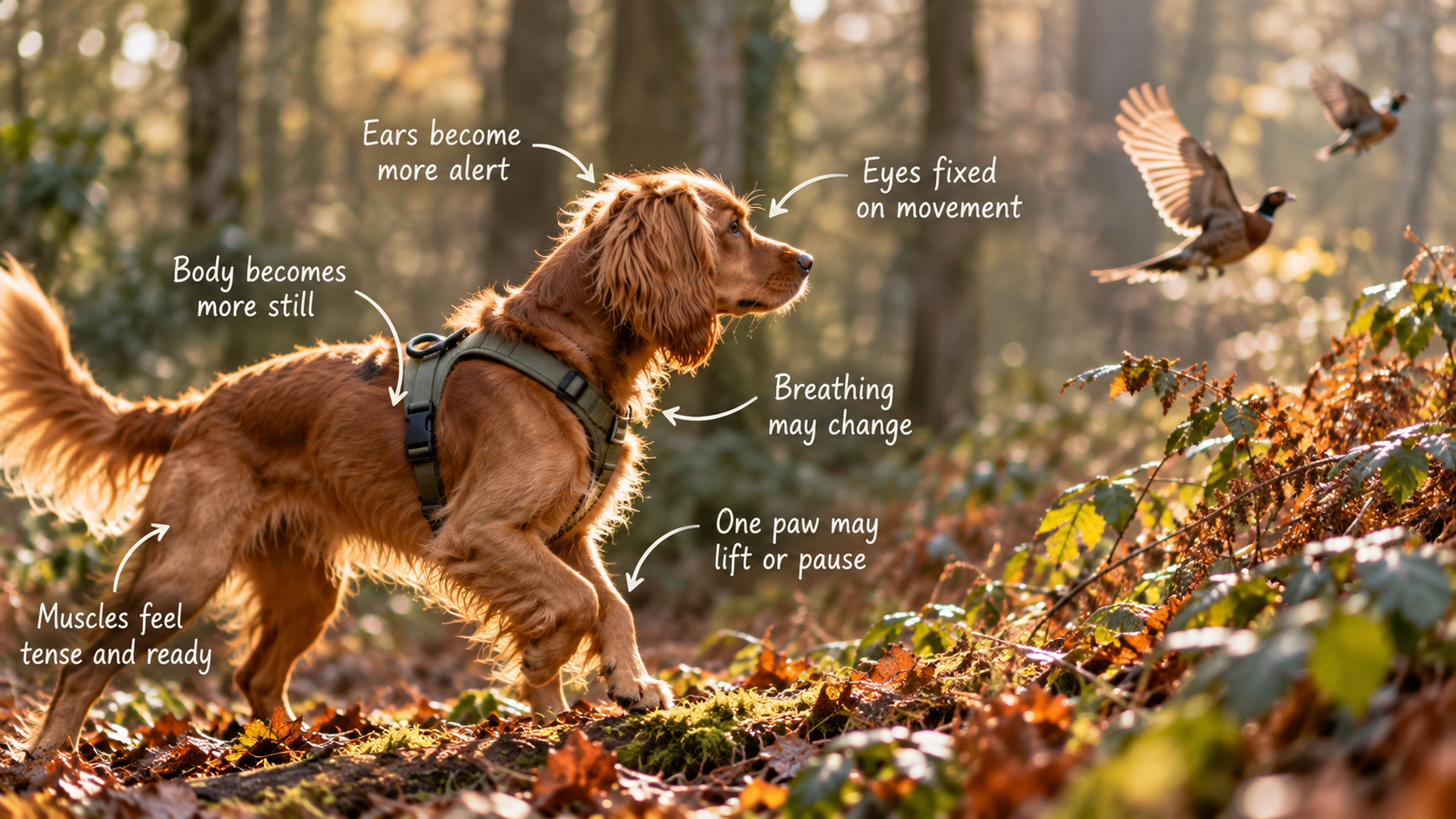
Not because we need to interrupt every time our dogs notice something interesting, but because the earlier we recognise changes in their behaviour, the more opportunities we have to help them.
There’s a difference between a dog who is enjoying investigating their surroundings and one whose excitement is building to the point where they’re finding it difficult to think about anything else. That difference won’t look exactly the same for every dog.
This is where becoming your dog’s detective can be so valuable. Start noticing what happens before your dog becomes fixated. What first captures their attention? How does their body language change? Can they still explore, respond to you or move away comfortably?
Sometimes helping might mean creating a little more distance, choosing a quieter route or gently encouraging your dog to move on before their excitement builds further.
Other times, they may be perfectly capable of watching for a moment before choosing to continue their walk.
We’re not trying to stop our dogs from noticing the world. We’re learning to recognise when they need our support to navigate it.
The more we understand those early moments, the better equipped we become to help our dogs make choices that keep both them and the wildlife around them safe.
Understanding Excitement, Frustration and Capacity
Have you ever noticed that your dog can walk past birds quite happily one day, yet on another day become completely absorbed by the very same experience?
It’s something I often explore with the dog owners I work with, because our dogs’ ability to cope with the world around them isn’t always the same from one day to the next.
Just like us, their emotional capacity can change depending on what they’ve already experienced. A busy morning, an exciting walk, unfamiliar surroundings or even a lack of quality rest can all influence how they respond to something that captures their attention.
It’s worth remembering that excitement isn’t necessarily a negative emotion. Watching, scenting and searching can be incredibly rewarding for our dogs. But when that excitement continues to build, it can become harder for them to disengage or respond to familiar cues.
For some dogs, frustration may creep in too, particularly when they’re eager to investigate something they can’t reach.
This is why I encourage owners to look beyond the behaviour and consider how their dog is feeling and coping in that moment.
Through my Calm Rhythm Method™, we explore how awareness, emotional capacity and the support we offer can help our dogs navigate everyday experiences with greater confidence.
Rather than expecting the same response every time, we begin to recognise when our dogs are ready to learn, when they need a little help and when giving them some space might be the kindest choice.
Because building confidence around birds isn’t about asking our dogs to try harder. It’s about helping them feel more capable, one experience at a time.
Helping Your Dog Feel More Capable
Once we begin to recognise what captures our dog’s attention and how they’re coping, we can start creating experiences that help them feel more confident and capable around birds.
This doesn’t mean we need to turn every walk into a training session.
In fact, some of the most valuable learning happens when we take a little pressure off and give our dogs the time and space to explore their surroundings without becoming overwhelmed.
Start by thinking about the environment you’re asking your dog to navigate.
If your dog finds birds particularly exciting, walking through an area full of pheasants or alongside a busy duck pond might be a little too challenging right now. Choosing somewhere quieter, where birds can be noticed from a comfortable distance, gives your dog a much better opportunity to practise coping.
Notice those moments when your dog spots something interesting but is still able to think, sniff or move on. These are lovely opportunities to gently acknowledge their choices and build on what they’re already capable of doing.
When things become a little too exciting? That’s when we can step in and help.
Perhaps that means calmly moving away together, offering a familiar activity or simply giving your dog more space to process what’s happening.
We don’t need to wait until they’re struggling before offering support.
The aim is to create experiences where our dogs can notice, explore and gradually learn that they don’t need to respond to every bird they encounter.
It’s also important to remember that progress won’t always look like a dog walking past birds without a second glance.
Sometimes progress is noticing a bird without lunging, being able to move away with your support or recovering more comfortably after an exciting encounter.
These small changes matter.
Through the Calm Rhythm Method™, we build on these everyday experiences, helping dogs develop the emotional capacity and practical skills they need to navigate the world with greater confidence.
Because the more capable our dogs feel, the more opportunities we have to enjoy those adventures together.
Enjoying Wildlife Together
For me, one of the greatest joys of sharing adventures with our dogs is having the opportunity to experience the natural world together.
Whether we’re wandering through woodland, exploring open countryside or enjoying a peaceful moment beside a lake, there’s so much for both of us to discover.
I believe our dogs should have the opportunity to enjoy those experiences too.
Of course, enjoying wildlife doesn’t mean chasing it, disturbing it or expecting our dogs to cope with situations they’re not quite ready for. It’s about helping them develop the confidence and skills to share these environments safely, while still allowing them to be curious about the world around them.
Imagine being able to pause beside a lake while your dog notices the ducks on the water, or walk through woodland where the sound of birds in the undergrowth doesn’t immediately send their excitement soaring.
Perhaps your dog still needs a little distance, some gentle guidance or the reassurance of a familiar activity. That’s absolutely fine.
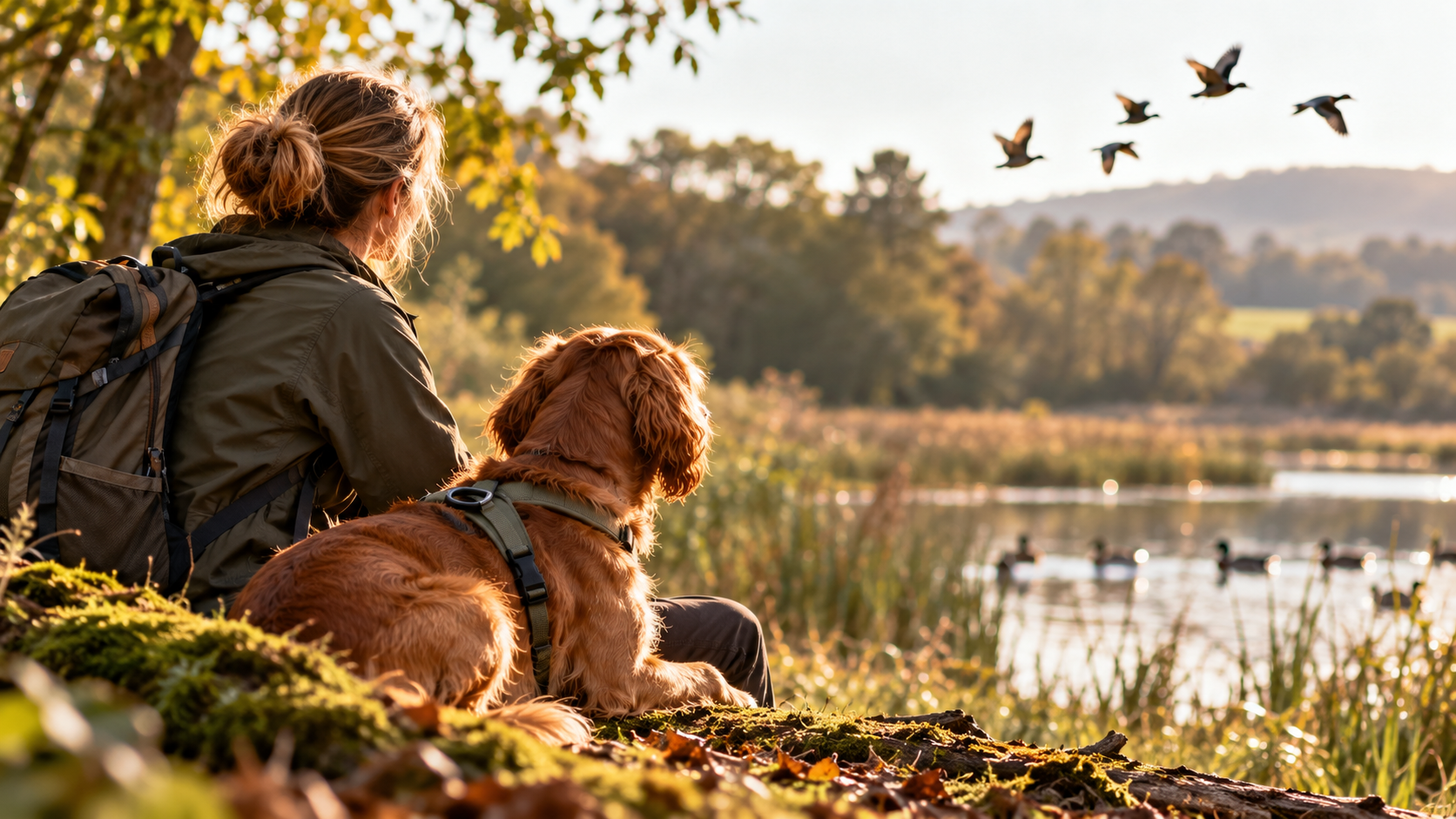 The adventure doesn’t have to look a certain way to be enjoyable.
Some days we’ll explore somewhere new, while others we’ll choose a familiar route where our dogs can relax, sniff and simply enjoy being outdoors.
As their confidence and capacity grow, so too can the experiences we share.
That’s what sits at the heart of My Happy Adventure Dog & Me. Not creating dogs who ignore the world around them, but helping them feel capable of experiencing it.
Because ultimately, it’s not just about where our adventures take us. It’s about how we and our dogs feel along the way.

